

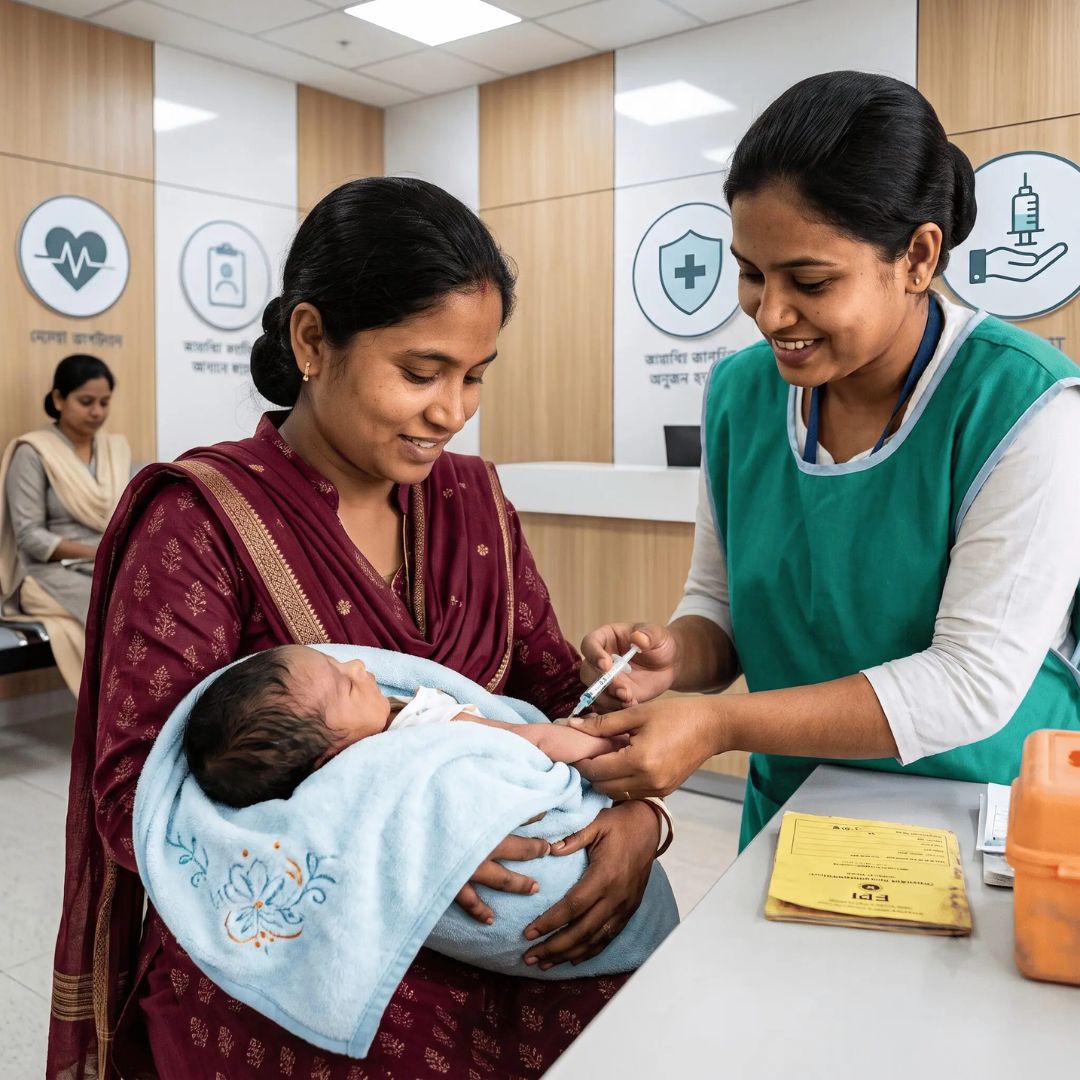
A Parent's Guide to the Newborn Vaccination Scheduling in Bangladesh
Welcoming a new baby comes with a lot of responsibilities. Simplify your baby's health journey with this clear, easy-to-read guide to Bangladesh’s official EPI newborn vaccination schedule for their first year.
Welcoming a newborn into the world is one of the most magical experiences a parent can have. Alongside the latenight feedings and endless cuddles comes the incredible responsibility of protecting your baby’s health. One of the most effective ways to do this is through timely vaccinations.
In Bangladesh, we are fortunate to have the Expanded Programme on Immunization (EPI), a globally recognized success story that provides free, life-saving vaccines to children across the country. But for a new parent, looking at a vaccination card can feel overwhelming. Let's break down exactly what your newborn needs during their first year.

The Standard EPI Vaccination Schedule
The EPI schedule is carefully designed by health experts to protect babies when they are most vulnerable. According to the Directorate General of Health Services (DGHS) of Bangladesh, here is the timeline for your baby's first vaccines:
| Age | Vaccines Given | What it Protects Against |
|---|---|---|
| At Birth (or within 14 days) | BCG, bOPV-0 | Tuberculosis (TB) and Polio |
| 6 Weeks | Pentavalent-1, bOPV-1, PCV-1, fIPV-1 | Diphtheria, Pertussis, Tetanus, Hep-B, Hib, Polio, and Pneumonia |
| 10 Weeks | Pentavalent-2, bOPV-2, PCV-2 | Booster doses for the diseases mentioned above |
| 14 Weeks | Pentavalent-3, bOPV-3, PCV-3, fIPV-2 | Final early-infancy booster doses |
| 9 Months | MR-1 | Measles and Rubella |
| 15 Months | MR-2 | Measles and Rubella (Second Dose) |
Why Timeliness Matters
Delaying vaccines can leave your baby unprotected during the months they are most susceptible to serious illnesses. Organizations like the World Health Organization (WHO) Bangladesh strongly advise parents to stick strictly to the 6, 10, and 14-week schedule. If your baby has a mild fever or a runny nose, they can usually still be vaccinated, but always consult with your local health worker or pediatrician first.
A quick tip for parents: Always keep your child's yellow EPI vaccination card safe! You will need it for school admissions and future health check-ups. Set reminders on your phone for their next appointment, and rest easy knowing you are giving them the healthiest possible start to life.
Random Posts
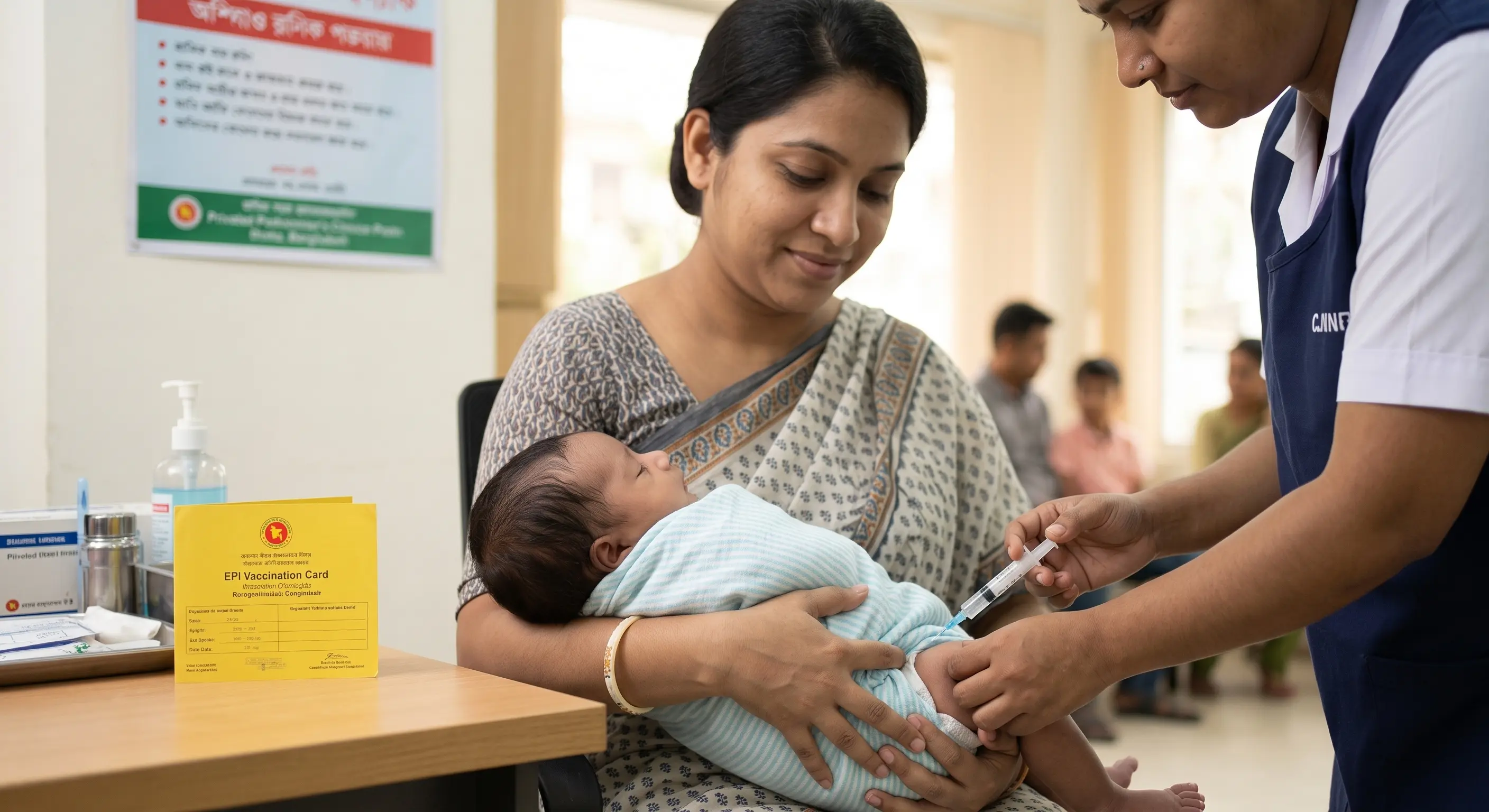
Vaccine day can be stressful for both parents and babies. Learn how to prepare for the appointment, understand normal side effects like mild fever, and discover the best ways to soothe your newborn after their EPI immunizations.
Read More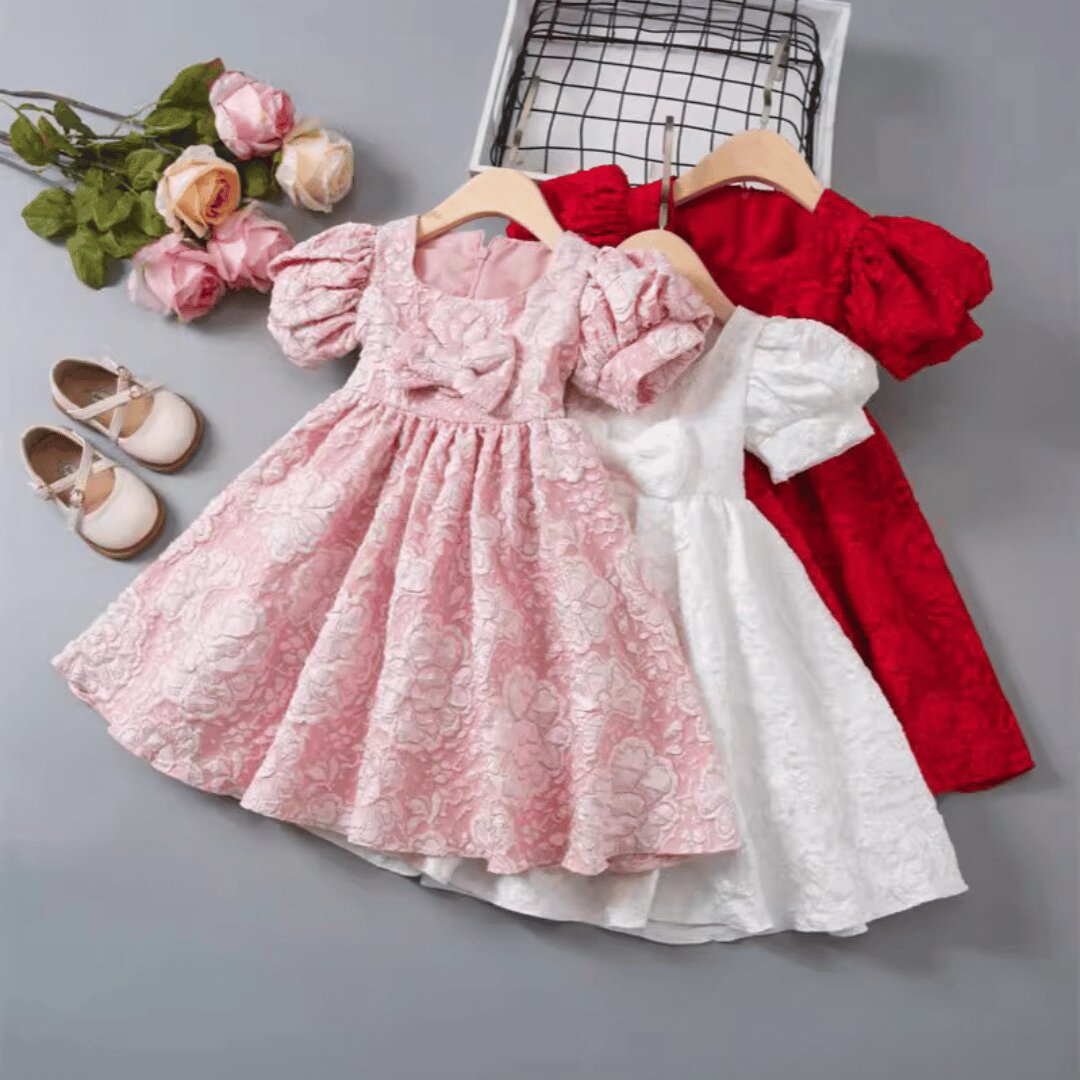
Love the look of heavy, luxurious formal dresses but hate how hot they make your toddler? Discover how Sadia found the perfect breathable, embossed floral dress at YUSHA that looks expensive but feels like a summer breeze.
Read More
The first few months after childbirth are a critical time for a mother's physical healing and mental well being. Explore our comprehensive guide on navigating the fourth trimester, managing physical recovery, understanding postpartum depression, and prioritizing maternal health.
Read More
In South Asia, mothers are often expected to sacrifice everything while neglecting their own health. Learn how to navigate cultural pressures, handle unsolicited parenting advice, and prioritize your well-being without the guilt.
Read More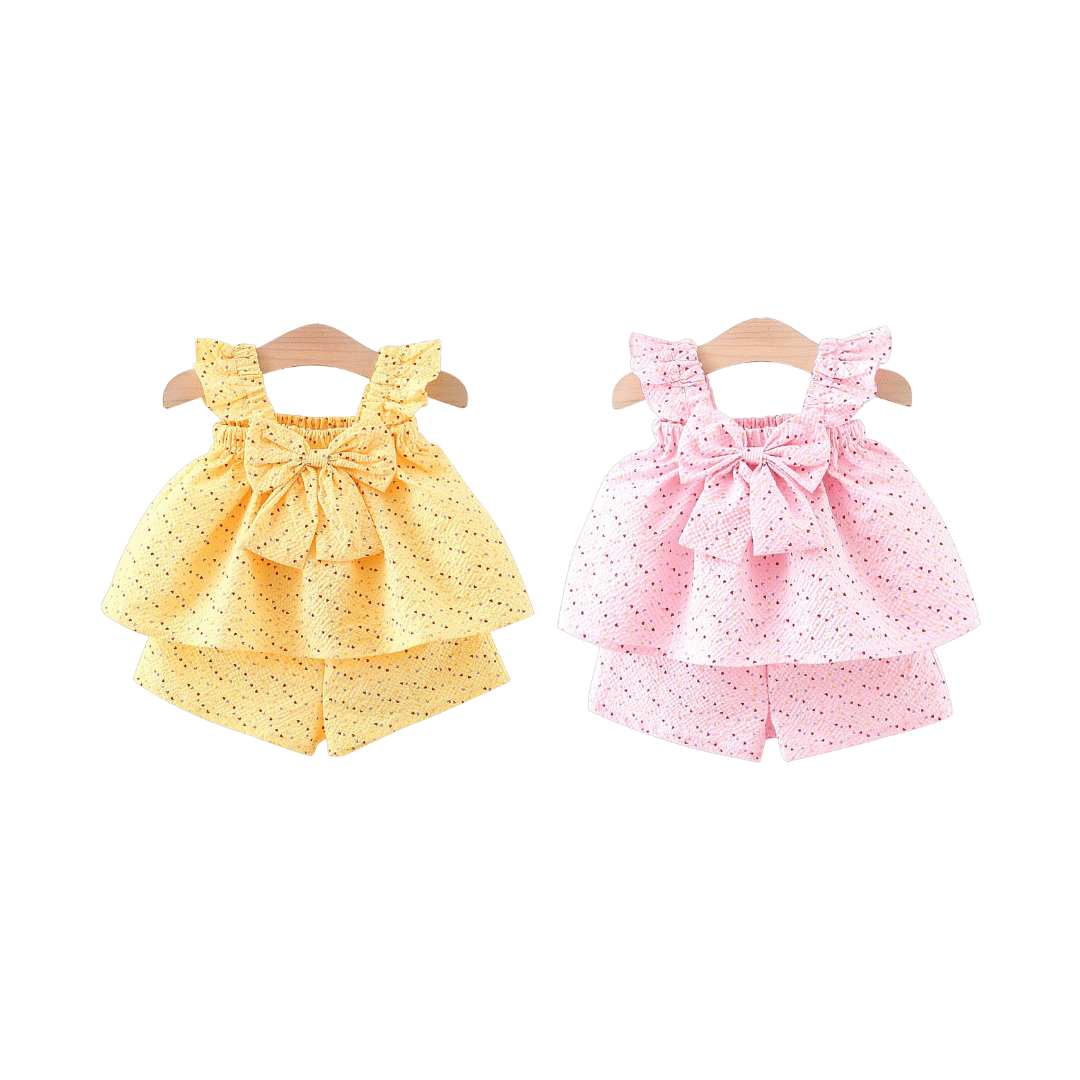
The formal events are over, but the summer heat is here to stay. Discover why parents are choosing YUSHA's 95% cotton Heart Print Shorts Set for stylish, breathable, everyday toddler playwear.
Read More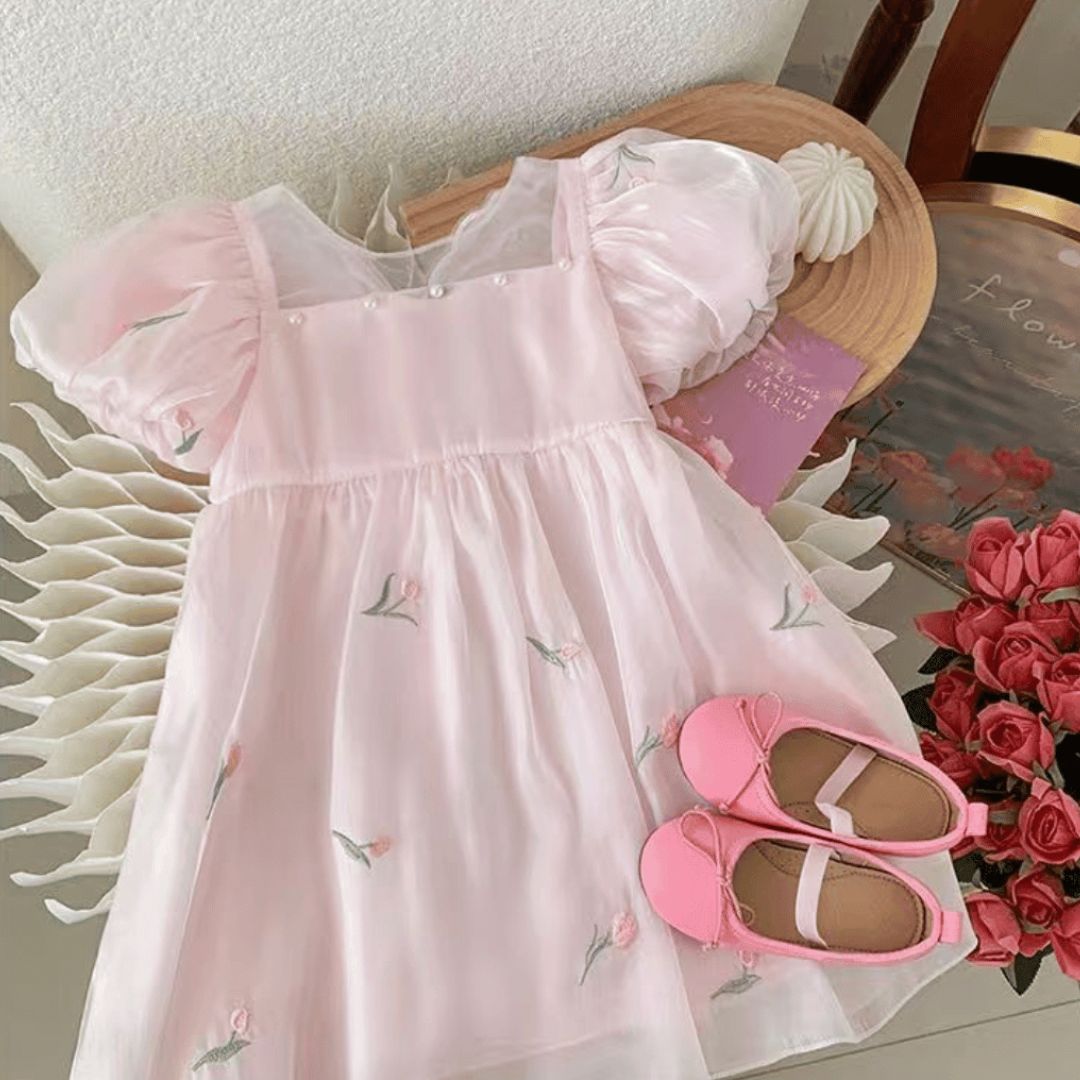
Bring her fairy tale to life with the Pink Butterfly Fairy Party Dress. Featuring delicate floral embroidery, pearl accents, sheer puff sleeves, and sparkling butterfly wings on the back. Designed with a comfortable A-line silhouette and a soft inner lining.
Read More